Content Marketing is a marketing method that builds trust by sharing useful and relevant information. It includes blogs, videos, social media posts, images, and other types of content.
By providing helpful information, businesses can build customer trust. This makes people more likely to choose their products or services.
It also helps businesses reach a wider audience, attract more visitors to their websites and social media pages, and support long-term growth.
Benefits of Content Marketing for Businesses
A strong content strategy helps businesses connect with their target audience. It focuses on sharing useful, relevant, and engaging information.
Blog articles, social media posts, videos, and infographics can attract potential customers. They also help increase brand awareness.
Another important benefit is building customer trust. When businesses share helpful information regularly, customers can better understand their products and services.
Content Marketing Strategies
A successful content strategy begins with understanding the target audience and their interests. This helps businesses create information that meets customer needs.
Businesses can use blog posts, social media content, videos, and infographics to answer questions and share useful information.
Using relevant keywords naturally can improve a website’s search engine visibility. Sharing content regularly on suitable digital platforms also helps businesses reach a wider audience and increase engagement.
Why Content Marketing Matters
Content marketing helps businesses reach more people. When useful information is shared, people begin to trust the brand. This brings more visitors to the website and social media pages. Since customers get the information they need, it becomes easier for them to make the right decisions. Sharing valuable content helps businesses attract new customers, build strong relationships with existing customers, and support long-term business growth.
Key Elements of Content Marketing
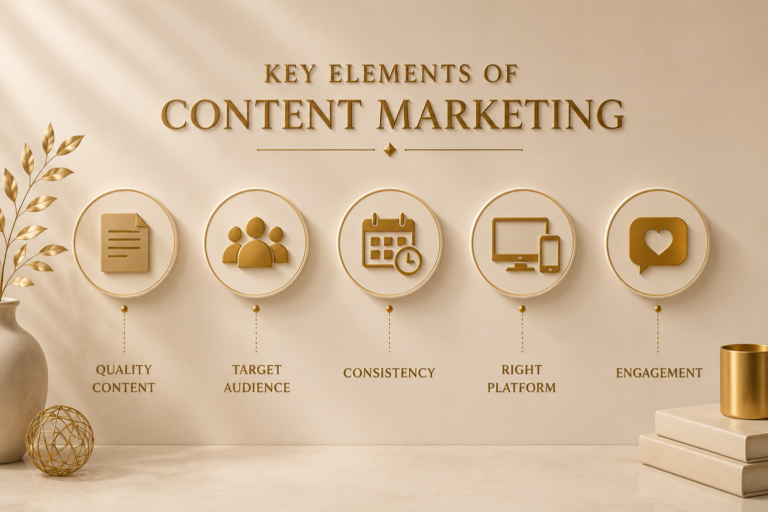
Quality Content – Create useful and valuable content that helps your audience.
Target Audience – Understand who your audience is and create content based on their needs and interests.
Consistency – Publish content regularly to keep your audience engaged.
Right Platform – Share your content on the platforms where your audience is most active.
Engagement – Respond to comments and feedback to build a strong relationship with your audience.
Challenges of Content Marketing
Every marketing strategy comes with its own challenges. Creating good content that people enjoy takes time and effort. Sharing new content regularly is not always easy. With so much competition, it can be difficult to capture people’s attention. Sometimes, even high-quality content does not bring immediate results. That is why it is important to be patient, continue sharing valuable content consistently, and listen to your audience’s feedback to make improvements.
How to Measure Content Marketing Success
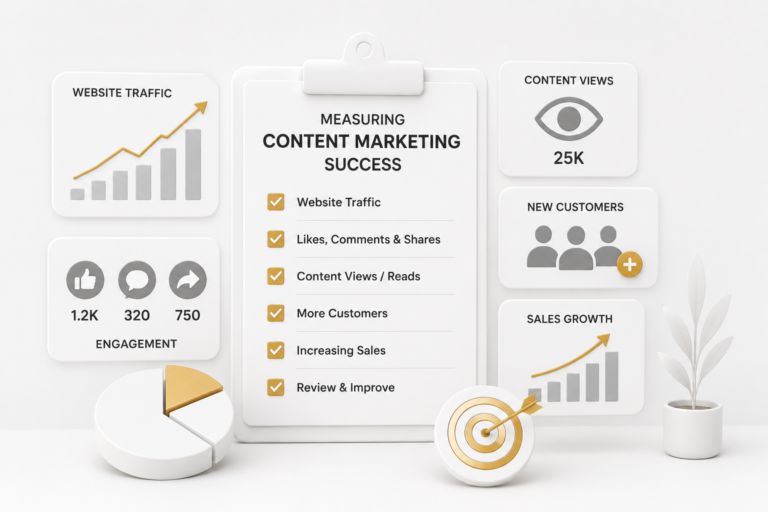
You can measure the success of your content marketing by looking at a few key factors. Pay attention to how many people visit your website, how many likes, comments, and shares your social media posts receive, and how many people read or view your content.
You should also check whether you are gaining more customers and whether your sales are increasing. By reviewing this information and making the necessary improvements, you can make your content marketing more effective.
7 Powerful Content Marketing Strategies for Business Growth
1.Create Valuable Content
Create useful and informative material that answers your audience’s questions and solves their problems.
2. Understand Your Target Audience
Learn about your audience’s interests, needs, and preferences. This helps you create relevant information that connects with them.
3. Optimize Content for SEO
Use relevant keywords, clear headings, and helpful information to improve your website’s visibility on search engines.
4. Use Social Media Platforms
Share your work on Instagram, Facebook, LinkedIn, and Pinterest to reach a wider audience.
5. Maintain a Consistent Posting Schedule
Publish useful material regularly to keep your audience engaged and build brand recognition.
6. Use Different Content Formats
Create blog posts, videos, infographics, and social media posts to make your information more engaging
7. Measure Content Performance
Track website traffic, audience engagement, and conversions to identify what works best and improve future campaign
Common Mistakes in Content Marketing
Too Much Selling – Focusing only on promoting products instead of providing valuable content.
Inconsistency – Posting content irregularly without a proper schedule.
Ignoring the Audience – Creating content without understanding what the audience needs.
Poor Quality Content – Focusing on quantity instead of quality.
Ignoring SEO – Not optimizing content for better search visibility.
Not Tracking Performance – Failing to measure results and identify what works best.
Conclusion
Explore my services to discover how I can help your business grow through SEO, social media marketing, content creation, and other digital marketing strategies.